Bet Builder & Same Game Parlays in Ghana: Which Bookmakers Actually Offer It, and How the Odds Are Priced
A bet builder lets you combine several markets from one single match, a team to win, a specific player to score, over 2.5 goals, into one bet with one combined price. It's different from a standard accumulator, which combines selections across different matches. Several major bookmakers serving Ghana carry the feature under their own branding: Betway calls it "Build A Bet," MSport and 1xBet both use "Bet Builder," and SportyBet runs a version called "Multi Maker." Others may offer similar same-match combination options without the same dedicated branding, worth checking directly in the match markets screen since this changes as apps update.
The part almost nobody explains properly is how that combined price actually gets set, and it's not what most bettors assume.
Why You Can't Just Multiply the Individual Odds
With a standard accumulator across different matches, multiplying each leg's odds together is a reasonable approximation, because what happens in one match has essentially no bearing on what happens in an unrelated match. A bet builder breaks that assumption completely: every leg comes from the same 90 minutes, so the legs are rarely independent of each other.
Take a concrete example: a strong home favourite to win (odds 1.80, implying a 55.6% chance) combined with over 1.5 goals in the match (odds 1.30, implying a 76.9% chance). Multiply those two prices naively and you get 2.34. But these two outcomes are positively correlated, a home team winning comfortably tends to come with goals, so the true probability of both happening together is higher than what independent multiplication suggests. Since the real combined probability is higher than the naive estimate, the fair combined price has to be shorter than 2.34, not equal to it. A bet builder pricing this correctly might actually offer something closer to 2.05.
| Bookmaker | Feature name | Confirmed available |
|---|---|---|
| Betway | Build A Bet | Yes |
| MSport | Bet Builder | Yes |
| 1xBet | Bet Builder | Yes |
| SportyBet | Multi Maker | Yes |
| Other tracked bookmakers | Varies / not independently confirmed | Check the match markets screen directly |
It Cuts Both Ways: Not Every Combo Gets Shortened
Correlation isn't always positive. Pair "home team to win by two or more goals" (odds 3.20, implying 31.3%) with "under 1.5 total goals in the match" (odds 2.60, implying 38.5%) and naive multiplication gives you 8.32. But these two legs are awkward to satisfy together, winning by two clear goals in a match with fewer than two total goals is a narrow path (effectively needing something close to a 2-0 scoreline specifically). They're negatively correlated: the true joint probability is lower than naive multiplication suggests, so a fairly priced combination here should actually pay more than 8.32, not less, something closer to 9.50 would better reflect how genuinely hard both conditions are to satisfy at once. The direction of the adjustment always follows the same logic: legs that make each other more likely get tightened, legs that make each other less likely get loosened, and legs that barely affect each other land close to the naive multiplication.
How Bookmakers Actually Price This
In practice, no trading team is solving a clean textbook correlation formula for every possible combination in real time. Modern bet builder pricing runs on simulation: models play out a given match thousands of times using each team's real scoring and event data, count how often a specific combination of outcomes lands together, and derive the price from that simulated frequency directly. The math above is the reasoning that explains why the number moves the way it does; the actual number your app shows you comes from a simulation engine doing the same logic at much greater scale and detail.
The Margin Question: Why More Legs Almost Always Means Worse Value
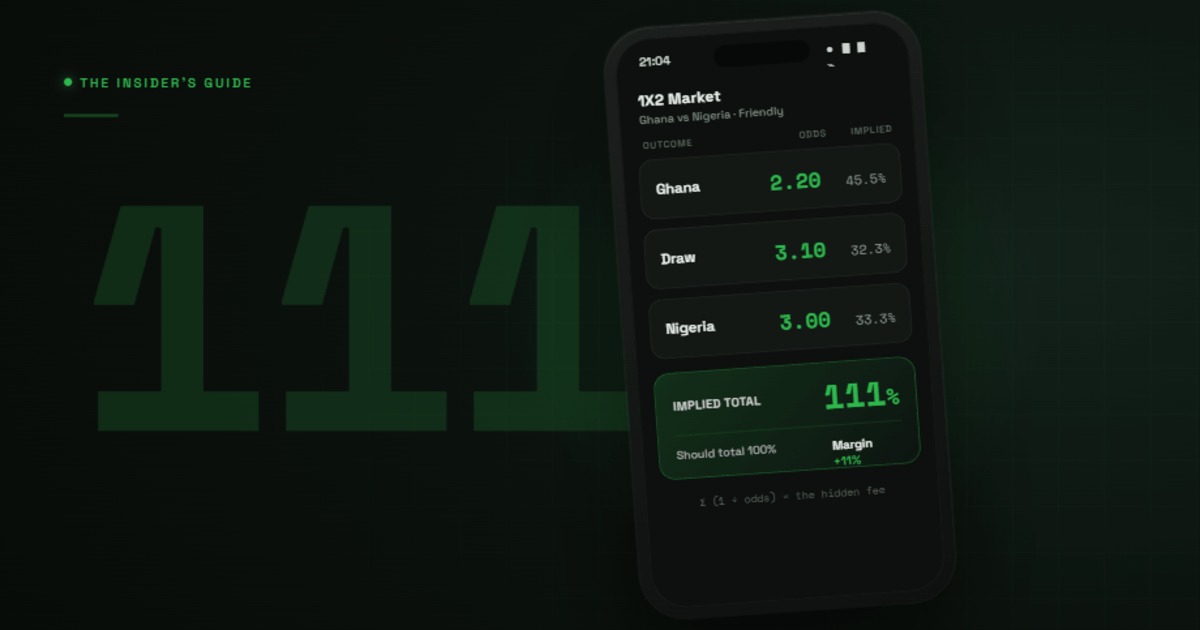
Correlation pricing decides the shape of the number, but it doesn't decide who the number favours. Every individual market on a bookmaker's board already carries a built-in margin, commonly somewhere around 5% on a well-priced single market. A bet builder doesn't just carry that same margin once, it applies a margin on top of the combined, correlation-adjusted probability itself, and that layer compounds with every extra leg you add.
Work through it roughly: three individual markets each priced with a fair 5% margin already hand the bookmaker a small edge on each one separately. Combine them into one bet builder selection, and the operator's model applies its own margin again to the joint outcome, on top of whatever margin was already embedded in how the individual legs were valued going in. By the time you're four or five legs deep, a bet that looked like a collection of reasonably priced markets can carry a genuinely uncompetitive combined margin, sometimes in the high teens or worse, even though nothing about any single leg looked unfair in isolation. This is separate from the correlation question entirely: a well-matched, positively correlated set of legs can still be poor value overall once the stacked margin is accounted for.
The practical rule: the correlation adjustment tells you the direction a combined price should move relative to naive multiplication, but it never tells you the combination is good value just because it moved the "right" way. More legs always means more accumulated margin, full stop, and that's true whether the legs help or hurt each other.
Trap Bet: Multiplying the individual leg odds yourself and assuming the bet builder price should match it. When the legs are compatible with each other, like a team winning and the match going over on goals, the correctly priced combination will almost always be shorter than your mental math, not because you're being shortchanged, but because the legs genuinely help each other happen. Expecting the naive product is expecting the wrong number.
What This Means for Building Your Own Combos
The practical takeaway isn't a formula to run yourself, it's a filter for picking legs. Combos built from genuinely compatible outcomes (a favourite winning comfortably, paired with that same favourite's goals total or a specific attacker scoring) will price shorter than they look on paper, so don't chase them purely for an inflated-looking number, the market has already accounted for how likely they are to land together. Combos built from outcomes that don't naturally sit together get a fairer, longer price for exactly that reason. Either way, the price you're offered already reflects the relationship between your legs far more precisely than a quick multiplication in your head ever will.
None of this replaces basic staking sense either. A bet builder is still one bet, and it's worth sizing it the same way you'd size any other single, speculative wager, not treating a five-leg combo as five separate small risks just because it feels like it's made of several picks. The margin math above already tells you why: it's priced, and it stakes, as one bet with one combined level of risk.
Note: Compare bet builder prices across more than one app before staking. If betting ever stops feeling like a choice, our guide to free, confidential help in Ghana is there for you.