The Accumulator Correlation Trap: Why Your 5-Leg GPL Bet Slip Isn't as Safe as It Feels
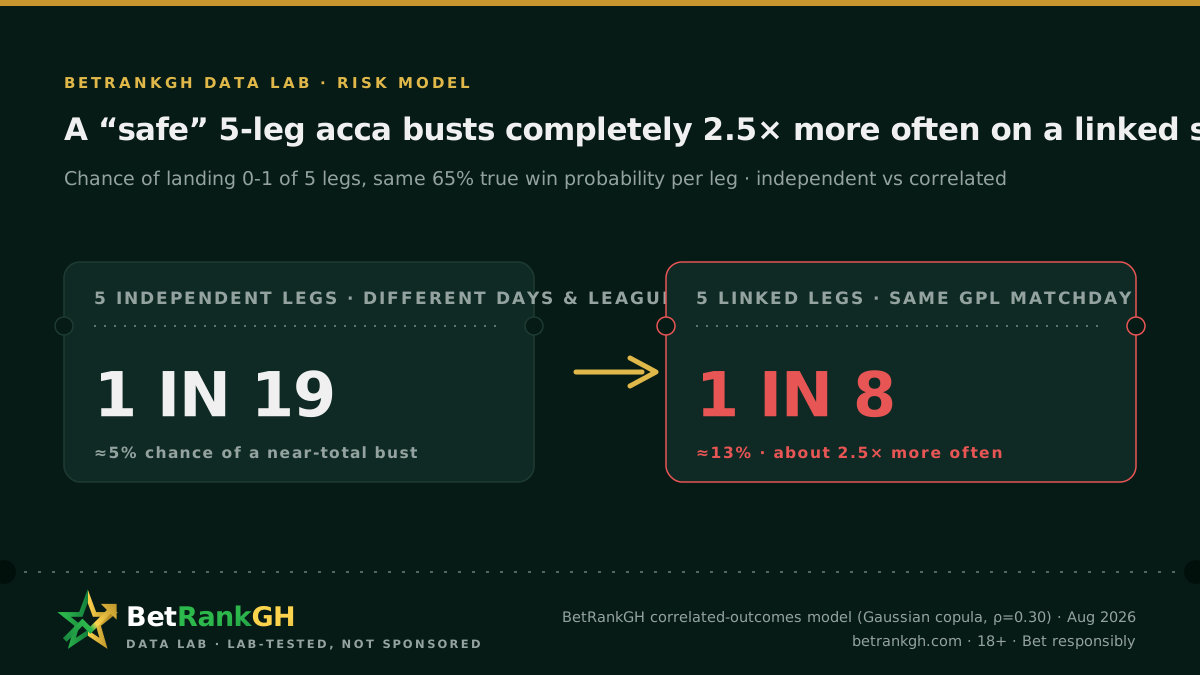
Every recreational bettor does the same mental math on a big accumulator: five legs, each one feels like a 65-70% shot, so surely most of them land. It's a comforting read, and it's also not how a multi actually behaves once the legs stop being independent of each other. On a single Ghana Premier League matchday, the same referee pool, the same August weather system, and the same fixture-congestion pressure can quietly link five "unrelated" selections into one bet wearing five different shirts.
At BetRankGH, we don't tip. We find where the odds don't match the actual probability, and correlation between legs is one of the clearest examples: it changes both your real chance of winning and how that risk actually plays out, in ways almost nobody staking a same-day multi accounts for.
How Accumulator Odds Assume Something That Isn't True
A bookmaker prices a traditional cross-match accumulator by multiplying the decimal odds of every leg together, which is mathematically the same as multiplying the implied probability of each leg. Five legs each priced at a fair 65% true chance gives an implied combined probability of roughly 11.6%, about 1 in 9. That's already a stark number next to how confident five "good" picks can feel, and it's the mechanism behind why parlay odds compound the house edge on every leg you add, ground we've covered before when comparing bet builders.
The part that gets skipped is the assumption baked into that multiplication: it only holds if the five outcomes are statistically independent of each other. Multiply probabilities and you get the right answer for five separate coin flips. Football matches on the same day, in the same league, refereed from the same pool of officials and played in the same weather, are not five separate coin flips. They share hidden common factors, and once legs share a factor, multiplying their individual probabilities stops giving you the true answer.
What Actually Links Correlated Bets in an Accumulator
Nobody deliberately builds a "correlated" accumulator. The correlation shows up as a side effect of how a same-day slip gets built in the first place. A few concrete Ghanaian examples:
- Shared officiating. The Ghana Football Association draws referees for a full GPL matchday from a relatively small national pool. A crew that's been instructed to crack down on dissent, or one that's historically card-shy, tends to officiate that way across more than one fixture on the same weekend, nudging cards and stoppage-time markets in the same direction across multiple legs.
- Regional weather. August and September sit inside Ghana's rainy season. A storm system moving through the Ashanti and Greater Accra regions on a Saturday can affect pitch conditions at more than one venue on the same card, pushing several matches toward fewer goals at once, not because the teams changed but because the surface did.
- Fixture congestion. When several clubs are carrying a midweek CAF or cup replay into the weekend, tired legs show up across more than one of your picks simultaneously, especially in unders and both-teams-to-score markets, because fatigue isn't a single-team story on a congested calendar.
- Narrative bias, not a real factor at all. "It's a good weekend for favourites" isn't a mechanism, it's a feeling, and it's worth separating from the three real ones above, because it produces the same false sense of a shared thread with none of the actual statistical link.
What the Correlation Actually Does to Your Slip
To see the effect honestly, we built a simplified model rather than guess: five legs, each with a true 65% win probability, linked by a shared factor at a moderate strength (a statistical correlation of 0.30, simulated through 1.5 million trials). That level is a plausible stand-in for a same-day GPL slate sharing weather, officiating and fixture-congestion pressure, not a measured figure specific to any single matchday.
Two things move at once, and both matter. The chance of landing all five legs nearly doubles versus treating them as independent, from about 1 in 9 to roughly 1 in 4. That sounds like good news, and if the shared factor genuinely works in your favour, it is: the bookmaker is still pricing your multi as if the legs were independent, so a real positive correlation you've correctly identified is an edge the price doesn't reflect. But the same mechanism cuts the other way with equal force. The chance of a near-total bust, landing one leg or fewer, rises from about 1 in 19 to roughly 1 in 8, about 2.5 times more often. And the "so close" middle ground, four of five legs landing, the outcome that makes a losing acca feel like bad luck rather than a pattern, actually shrinks under correlation. Linked legs don't spread your risk across five separate stories. They compress it into two: everything breaks your way, or the same shared factor takes out several legs at once.
Why This Feels Safer Than It Is
The trap isn't that correlation is bad. It's that you almost never know, leg by leg, which way it's pointing. A real shared factor working for you is genuinely valuable and the bookmaker's naive pricing won't reflect it. A real shared factor working against you produces exactly the "unlucky weekend" feeling recreational bettors report so often, several picks failing together for what looks like no reason, because the reason was one factor, not five independent ones. And a false sense of correlation, backing five favourites because "it's a good day for the big clubs," carries all of the added variance and none of the possible edge, since there's no real mechanism underneath it. Without checking the actual link (or the absence of one) leg by leg, a bettor has no reliable way to tell which of the three situations they're actually in.
What is true regardless of direction: a same-slate multi is streakier than the "five independent 65% shots" mental model predicts. Run enough of them across a season and you'll see longer losing runs and occasional bigger clean sweeps than that mental model prepares you for, even if your long-run average selection quality hasn't changed at all.
Trap Bet: A bookmaker's boosted 10-leg "Super Saturday" accumulator, built entirely from that same day's GPL or EPL card. Operators can afford eye-catching boosts on exactly this kind of slip because the correlation between same-day, same-conditions legs is opaque to the punter and, on average, doesn't cost the house anything extra to offer. The boost is real. The independence the marketing implies isn't.
How to Build a Safer Accumulator
- Spread legs across leagues, days and kickoff windows. A Ghana Premier League leg, an English Premier League leg on a different day, and an evening fixture in a third competition don't share a referee pool, a weather system, or a fixture-congestion week. That's genuine diversification, not just a bigger slip.
- Treat a same-slate multi as one position, not five. If several legs come from the same GPL matchday, size the stake as if you're making one correlated bet on that day going well, because statistically, that's closer to what you're actually doing.
- Be skeptical of "banker of the day" columns that stack same-card favourites. Five favourites from one weekend's fixture list isn't five independent reads, it's one read on the weekend repeated five times, dressed up as five separate picks.
- Know what acca insurance actually buys back. Several GCG-licensed operators offer this: Soccabet's ACCA Insurance safety net on 10-plus leg accumulators refunds a stake or voids a single losing leg if your multi comes up just short. That protects against one bad leg. It does nothing for a shared factor that takes out three or four legs at once, which is precisely the scenario correlation makes more likely.
- Ask what the shared factor actually is before you stake, not after. If you can't name the specific link (a weather system, a referee crew, a fixture-congestion week), you're probably looking at narrative bias, not a real correlation, and the extra variance isn't buying you anything.
None of this means stop building accumulators. It means building them with an honest model of what's actually linking your legs together, since the bookmaker's price never adjusts for that link either way; it's a fixed multiplication regardless of what's really driving your five selections toward the same outcome.
Note: Sizing a correlated multi correctly is a staking decision, and our bankroll management guide covers the unit-sizing framework this piece assumes. And if betting ever stops feeling like a choice, our guide to free, confidential help in Ghana is there for you.