Boxing Betting in Ghana: A Bukom Bettor's Guide to Odds, Rounds and Method of Victory
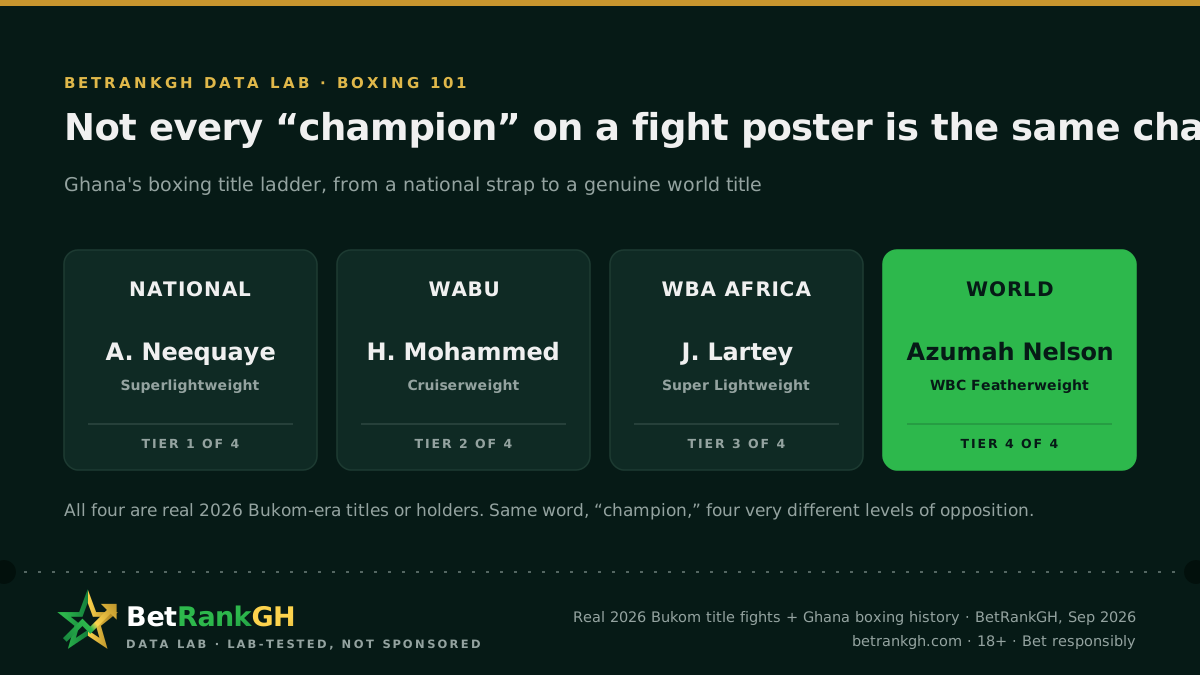
Bukom, a small, densely packed neighbourhood in Accra's Jamestown district, has produced eight boxing world champions, more than most countries manage in a century. Azumah Nelson, Ghana's greatest fighter and a two-weight WBC world champion, came out of that same stretch of streets where fishing and fighting are both, genuinely, ways of life. Bukom Boxing Arena still hosts real title fights most months of the year. And yet search this site, or almost any Ghanaian betting site, for how to actually bet on a boxing card, and there is nothing. Football, virtuals, even esports get covered. Boxing, a sport this country has a legitimate claim to being world-class at, gets ignored.
This guide fixes that: the three bet types every boxing card actually uses, how the odds differ from a football market, and the one thing about Ghana's own title structure that changes how you should read a "champion" tag on a fight poster.
The scene is genuinely active, not a nostalgia act. Bishop Boxing Promotions opened 2026 with "Best of Bukom 2" on New Year's Day, a full card built around a West African Boxing Union cruiserweight title fight, a National superlightweight title bout, and an undercard running down to an amateur curtain-raiser. Real title fights at Bukom aren't a once-a-decade event, they're a recurring, betting-market-relevant fixture on the local sporting calendar.
The Three Bets Every Boxing Card Actually Uses
Almost every boxing market on a licensed sportsbook reduces to three questions, asked separately: who wins, how do they win, and how long does it take. Learn these three and you can read any fight card on any bookmaker's boxing page.
- Moneyline (the winner). A straight bet on who wins the fight, priced in the same decimal odds as any football match.
- Method of victory. A bet on how the fight ends, decision, knockout or technical knockout, rather than just who wins.
- Round betting. A bet on when the fight ends, either a specific round or an over/under line on the total number of rounds completed.
Reading a Boxing Moneyline: Why It Isn't a Three-Way Market
A football match splits into three outcomes, home, draw, away, and the bookmaker's implied probabilities sum to a bit over 100%, the overround, as we've broken down in detail elsewhere. A boxing moneyline is structurally different: it's fundamentally a two-fighter market, with a draw priced separately and usually at very long odds, because professional boxing draws are genuinely rare, a split or majority draw on the judges' cards, or extremely rarely a no-contest ruling. The same conversion arithmetic still applies, divide 1 by the decimal odds to get the implied probability, then compare that against your own honest read of the two fighters, but the shape of the market itself is simpler than a three-way football line, and typically carries a tighter margin as a result, fewer outcomes for the bookmaker to build a cushion into.
Method of Victory, With Real Fights as Examples
"Method of victory" markets typically split into decision (the fight goes the scheduled distance and judges score it), or knockout/technical knockout (the fight ends early, by stoppage). Two real 2026 Bukom title fights show the difference clearly. In April, Theophilus Allotey captured the WBA Africa Gold super flyweight title with a stoppage win over Jonas Erastus, a knockout-market result. In the same period, Jerry Lartey dethroned the previously unbeaten Sheriff Quaye to take the WBA Africa super lightweight title, a result that shows judges' scorecards matter just as much as power. A fighter's knockout ratio in their full record is the single most useful piece of public information for pricing this market yourself: a puncher with a high stoppage rate genuinely changes the odds on how a fight ends, separately from who wins it.
Round Betting and Total Rounds
Round markets come in two forms: betting on the exact round the fight ends, a long-odds, high-payout bet across many possible rounds, or an over/under line on total rounds completed, closer in structure to a football over/under goals market. The detail that trips up bettors new to boxing: the scheduled distance itself varies by fight. National and regional title fights on a Bukom card often run 8 or 10 rounds, while a full world-title fight is scheduled for 12. A total-rounds line only makes sense relative to that fight's actual scheduled distance, so check the fight's billed length before reading any round total as automatically "high" or "low." A line of "over 5.5 rounds" means something completely different in an 8-round bout than it does in a 12-round title fight, even though the number on the bet slip looks identical.
Ghana's Real Title Ladder, and Why "Champion" Doesn't Mean What You Think
Boxing's title structure runs in tiers, and Ghana's own scene shows the full ladder in miniature. A fighter can hold a National title, then a regional belt like the West African Boxing Union (WABU) title, contested by Haruna Mohammed and Nii Ashitey Larbie for the cruiserweight strap on a "Best of Bukom" card this past New Year's Day, then a continental title like the WBA Africa strap Allotey and Lartey won in April, before ever being in genuine contention for a global world title of the kind Azumah Nelson and Isaac Dogboe held. Each tier represents a real, but very different, level of opposition. A fighter billed as a "champion" on a poster could hold any one of these, and the gap in skill between a National champion and a genuine world-title challenger is enormous, even though both get called "champion" in the same sentence.
Trap Bet: Treating an "unbeaten" record as a guarantee once a fighter moves up a title tier. Sheriff Quaye was unbeaten before Jerry Lartey dethroned him for the WBA Africa super lightweight title in April 2026, a real, recent reminder that a perfect record built at a lower level tells you less than it feels like it should once the opposition genuinely improves.
Finding Boxing Markets on a Ghanaian Sportsbook
Boxing sits alongside football, tennis and darts as a standard sport category on most licensed international-style sportsbooks operating in Ghana, though coverage of a specific Bukom-level domestic card versus a major global title fight varies by operator and by how much international attention that particular bout is drawing. A globally-promoted world-title fight will typically carry moneyline, method-of-victory and round markets on any major book; a purely domestic National or WABU-level bout might only get a straight moneyline, if it's listed at all. Check your bookmaker's own sport menu for the specific fight you want, since not every domestic-level card gets full market coverage the way a major world-title fight does, and don't assume a Bukom card is covered just because you've seen a bigger international fight priced up the same week.
Bukom doesn't need borrowed hype to be worth watching, it's produced more world champions than most countries manage in a lifetime, and real title fights happen there most months of the year. Betting on it well just means applying the same discipline as any other sport: know which of the three bet types you're actually placing, and know which tier of "champion" you're actually betting on.
Note: Converting any boxing price into a probability you can actually check uses the exact method in our guide to reading betting odds. Staking it sensibly is covered in our bankroll management guide. And if betting ever stops feeling like a choice, our guide to free, confidential help in Ghana is there for you.