Live Betting: A Practical In-Play System for Ghanaian Bettors
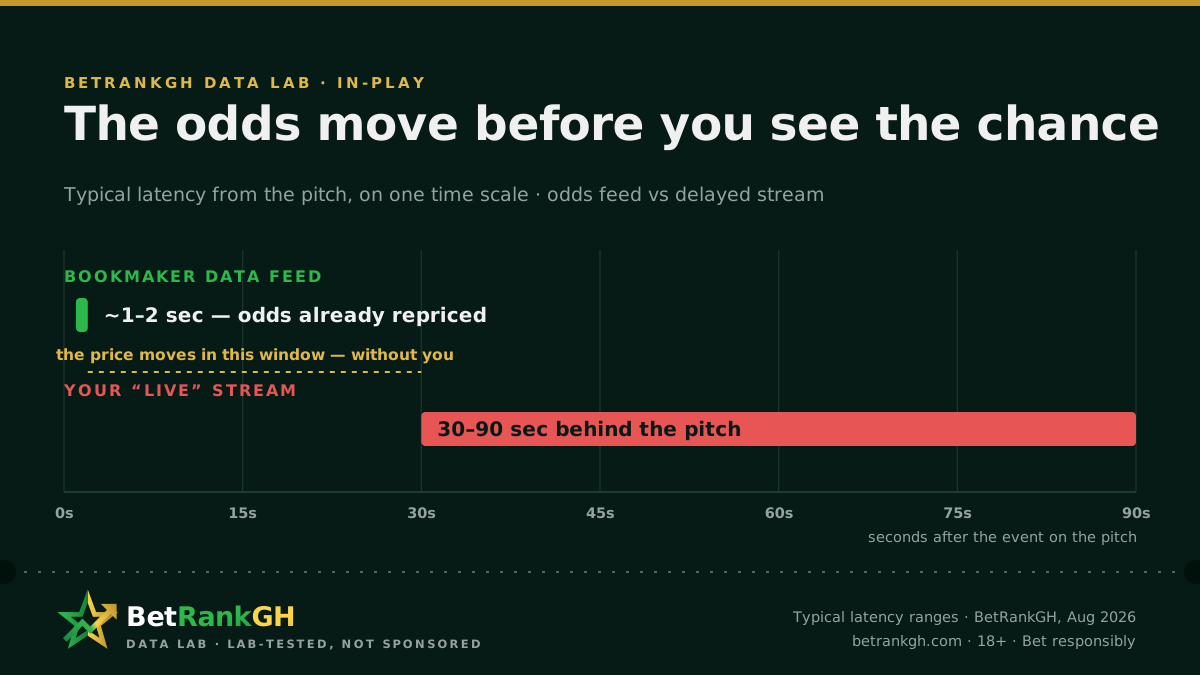
Watch a live match on a phone stream and place an in-play bet on the next meaningful moment, and there's a good chance you're betting against information you don't have. TV and streaming broadcasts typically run 30 to 90 seconds behind the actual action, sometimes close to two minutes depending on the provider, while bookmakers work from a near-instant data feed. That gap is the single most important thing to understand before betting live, and almost nobody explains it.
At BetRankGH, we don't tip. We find where the odds don't match the actual probability, and in-play betting is one of the few places where that gap is created by latency itself, not by a genuine pricing mistake.
Why the Odds Update Before You See the Goal
The chain behind a live price looks like this: something happens on the pitch, an official data scout courtside logs it, a feed provider like Sportradar or Genius Sports aggregates and distributes it, the bookmaker's pricing engine reprices the market, and only then does the new price reach your app. Each handoff costs a fraction of a second, but the whole chain still runs far faster than a video stream, which has to encode, transmit and buffer before it reaches your screen. Bookmaker trading desks, meanwhile, often watch a direct, undelayed feed. By the time you see a shot on target on your phone, the market has frequently already moved, or briefly closed, in response to what actually happened moments earlier.
Walk through an actual goal to see the gap in practice. The ball crosses the line at, say, the 0-second mark. The data scout logs it within a second or two. The feed provider distributes it to every subscribed operator almost immediately after. The pricing engine suspends the market and reprices within another second or two. Your video stream, meanwhile, is still showing the buildup play from 30, 60, or even 90 seconds earlier, depending on your provider and connection. By the time the goal actually appears on your screen, the market has typically already suspended, repriced, and reopened, all before you've seen the ball hit the net.
Three separate sources of lag stack on top of each other, and it's worth knowing which is which. Broadcast delay is the biggest and most variable, official low-latency streams can run under 10 seconds while some third-party or re-streamed feeds run past a minute. The bookmaker's own repricing speed is typically the fastest link in the chain, often under two seconds for major operators using top-tier data feeds. Your own connection and app add a smaller, usually sub-second layer on top. Betting effectively in-play starts with knowing that the biggest, most controllable piece of that stack is your stream choice, not the bookmaker's pricing speed.
Market Suspensions Are a Signal, Not a Bug
After a goal, a red card, or a penalty award, bookmakers typically suspend the affected markets for a short window, often just one to two seconds, while the pricing engine recalculates against the new state of the game. If you try to place a bet in that window, it either queues against the old price and gets rejected, or simply isn't accepted until the market reopens. That's not a technical glitch to work around. It's useful information: a suspended market is telling you something material just happened, and the price that appears when it reopens already reflects that event more accurately than anything you could calculate by eye in the same few seconds.
This is worth internalising because it reframes what "fast" actually means in live betting. Trying to beat the suspension is trying to out-race a system built specifically to close that exact window before you can act on stale information. The realistic play is the opposite: treat the suspension itself as the signal, and let the reopened price do the work a mental calculation under time pressure never could.
A Practical System for Betting In-Play
- Don't chase instant-reaction props on a delayed stream. "Next goal," "next card," and similar ultra-fast markets settle on a timescale shorter than your broadcast delay. If you're reacting to something you just watched happen, the price has usually already absorbed it.
- Favour markets that resolve over a longer window. Full-time result, total goals, and similar markets are far less sensitive to a few seconds of latency than a live "next event" prop, because there's more match left for your read to actually matter.
- Set your cash-out rule before kickoff, not during it. Decide in advance what triggers a cash-out (a favourite conceding an early lead, a specific scoreline, a set profit percentage) so the decision is a rule you follow, not an emotional reaction to what just happened on screen.
- Read the suspension, don't fight it. When a market locks after a big moment, that's your cue to wait for the reopened price rather than mash the bet slip trying to beat the freeze.
- Pick the lowest-latency stream you can. If your bookmaker offers an official in-app stream, it's usually built closer to a low-latency standard than a general third-party broadcast or a re-streamed link, and shaving even 20-30 seconds off your delay meaningfully improves how current what you're watching actually is.
None of this is about reacting faster than the market, that race is already lost before your stream even loads. It's about choosing which markets your speed disadvantage actually matters for, and shifting your attention to the slower-moving reads where it doesn't.
Where a Human Watching Actually Has an Edge
Pricing engines react fast to discrete, loggable events: goals, cards, substitutions once they're officially recorded. They're slower to fully price in things that unfold gradually and don't have a single data point attached, a team visibly tiring, a tactical switch that hasn't yet produced a shot, a keeper who looks increasingly uncomfortable under crosses. That's the genuine edge a bettor watching closely can have over an automated system: not reacting faster to the goal that already happened, but reading a shift in the pattern of play before it shows up as a discrete event the data feed can log.
A few concrete patterns worth actually watching for: a double substitution that visibly shifts a team from defending a lead to chasing an equaliser, well before that shift produces a shot on target the data feed can register. A fullback who's been caught upfield twice in five minutes, a growing signal the space behind him is being targeted, long before it results in a logged chance. A goalkeeper who's started rushing his distribution under pressure, a tell that composure is cracking before it shows up as a mistake. None of these are things a pricing engine reacts to directly, because none of them are a single loggable event. They're patterns, and reading patterns in real time is a genuinely human skill an automated system running off discrete data points doesn't replicate well, at least not yet.
Trap Bet: Betting "next goal" or a similar instant-reaction market right after you personally see a big chance on your stream. If you can see it, the action already happened seconds ago in real time, and there's a real chance the market has already moved or briefly suspended in response. What feels like a fast, decisive read is often just you finding out late.
Note: In-play's rapid decision cadence deserves the same staking discipline as any other betting, our bankroll management guide covers the framework. And if betting ever stops feeling like a choice, our guide to free, confidential help in Ghana is there for you.